

Quick Summary
Adding outlets where a household uses them reduces overloaded power strips and risky cord runs. The right receptacle depends on location: GFCI near water, tamper-resistant designs for homes with kids, and 240-volt circuits for heavy appliances. Matching wire gauge to the breaker and using secure terminal connections help prevent hidden heat problems. Permit requirements, aluminum wiring, and ungrounded two-prong outlets are good cues to involve a licensed electrician.
A home can feel short on outlets the moment a new desk, kitchen appliance, or holiday display enters the picture. Power strips and extension cords can help for a while, but they add clutter and can overheat when overloaded.
Thoughtful electrical outlet installation puts power where you use it, making rooms safer and far more practical. A little background on outlet types, wiring, and safety rules makes it easier to plan the work with a licensed electrician.
When Electrical Outlet Installation Makes Sense in Your Home
Direct Electric Company hears from homeowners across Murrieta and Temecula about outlets for a handful of familiar reasons. A cord stretched across a doorway or tucked under a rug is common. Power strips plugged into other power strips (often called daisy-chaining) signal a room that needs more receptacles. Older homes with two-prong outlets lack a ground path, which leaves electronics and people more exposed during a fault.
Renovations open another door. A kitchen remodel, a garage turned into a home gym, or a new office corner often calls for outlets in fresh locations. Warning signs also deserve attention. Outlets that feel warm, show scorch marks, spark when a plug goes in, or hold plugs loosely point to worn parts or loose connections that should be checked soon.
Outlet Electrical Types and Where They Belong
Receptacles come in several styles, and the location usually decides which one fits best:
- Standard duplex outlets: These handle daily items, including lamps, phone chargers, and televisions, in bedrooms and living areas.
- 20 amp outlets: Recognizable by a small sideways slot, they suit kitchens, laundry rooms, and garages where appliances draw more current.
- GFCI outlets: Ground-fault protection cuts power within a fraction of a second when current leaks, which makes these a code staple near water in kitchens, bathrooms, garages, and outdoor spaces.
- AFCI protection: Arc-fault devices detect dangerous sparking inside walls and cords, and they often protect bedrooms and living spaces.
- Tamper-resistant outlets: Internal shutters block objects from entering the slots, a welcome feature in homes with young children.
- USB and smart outlets: Integrated USB ports reduce adapters, and smart outlets allow scheduling or remote control through an app.
- 240 volt receptacles: Dryers, ranges, and EV chargers call for these heavier circuits, which involve larger wire and a dedicated breaker.
- Weather-resistant outlets: Outdoor locations pair these with an in-use cover that keeps rain out even with a cord plugged in.
Matching the outlet to the circuit matters as much as matching it to the room. Homeowners can find more detail in our electrical outlets & switches services, which cover simple swaps and new circuits alike.
How Electrical Outlet Wiring Comes Together
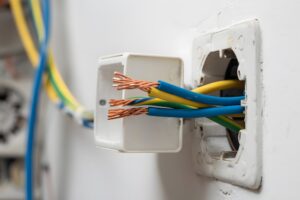
A standard receptacle connects to three conductors. The black or red hot wire carries current to the device and attaches to the brass screw. The white neutral returns current to the panel and lands on the silver screw. The bare or green ground wire connects to the green screw and provides a safe path for fault current to return.
Wire size has to match the breaker protecting it. Lighter 14-gauge wire suits a 15-amp circuit, and a 20-amp circuit calls for heavier 12-gauge wire to prevent overheating. Mixing the two can create a hidden fire risk inside the wall, which is one reason outlet wiring belongs with a licensed electrician.
Connection quality matters too. Push-in backstab terminals on budget outlets can loosen over time, which is why electricians usually prefer the side screws or a back wire clamp. Pigtails, short wire leads joined with a wire nut, help when several cables meet in one box. The box itself should have enough room for its wires, as an overstuffed box traps heat and strains connections.
How Our Electricians Add a New Outlet
Adding a new outlet usually follows a predictable order when a licensed electrician handles the work:
- Location planning: We choose a spot near where the device will live and check for studs, pipes, or ductwork behind the wall.
- Circuit capacity check: We look at what else shares the circuit, and a crowded panel might need attention first through our electrical panel services.
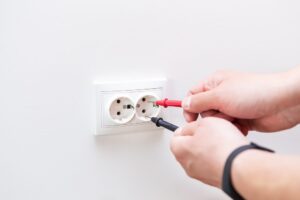
- Power off: The breaker is turned off, and the circuit is confirmed dead with a tested meter.
- Box installation: An old work box with swing clamps fits into finished drywall without extra framing.
- Cable run: Cable is routed from a nearby power source, either an existing outlet on the same circuit or the panel, through the wall cavity.
- Connections: Wires are attached to their matching terminals and tightened to the manufacturer’s specifications.
- Mounting and testing: The outlet and cover plate go on, power is restored, and polarity, grounding, and GFCI function are tested.
Professional testing catches reversed hot and neutral wires, open grounds, and other faults that a working lamp might hide, which is one more reason to leave new outlets to the licensed team behind our outlet and switch services.
Power Placed Where Your Day Happens
Well-placed outlets make a home easier to live in and clear away the tangle of cords that creeps into busy rooms. Lasting results come from pairing the correct receptacle with a properly sized circuit and secure connections.
Our electricians have spent over a decade helping Inland Empire homeowners add power safely, from single outlets to dedicated appliance circuits. When cords start crowding your floors, contact us to plan outlets that fit the way your household lives.
FAQs
What height should a new outlet sit at?
Standard practice places wall outlets roughly 12 to 16 inches above the floor. Counter outlets in kitchens and bathrooms sit higher, and accessibility needs or furniture plans can justify a custom height.
Why did an outlet suddenly stop working?
A tripped GFCI elsewhere on the circuit often cuts power to downstream outlets, including ones in other rooms. Checking the GFCI buttons in bathrooms, garages, and outdoor areas, along with the breaker panel, usually reveals the cause.
How long do outlets typically last?
Receptacles can serve for decades, though heavy use wears out the internal contacts that grip plugs. A plug that slips out with little effort is a good sign the outlet needs replacing.