

Quick Summary
Adding an outlet from an existing line works well when the source is an accessible box on a circuit with spare capacity. End-of-run outlets and GFCI load terminals make good feeds, and dedicated appliance circuits make poor ones. Pigtailed connections, matched wire gauge, and testing help the new receptacle perform reliably, and older wiring, plaster walls, and local permit rules all make this work for a licensed electrician.
A bedroom with a single outlet hidden behind the dresser or a home office running on a tangle of power strips can make daily routines frustrating. Running a brand-new circuit from the panel is one option, but tapping into wiring already inside the wall is often simpler and more affordable.
How to add an electrical outlet to an existing line comes down to choosing a good power source, confirming the circuit has room, and making secure connections at both ends.
How to Add an Electrical Outlet to an Existing Line: The Basic Idea
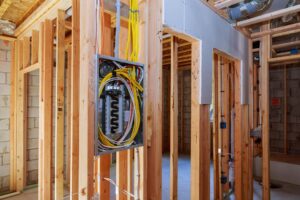
Direct Electric Company electricians handle this request regularly for homes across Murrieta and Temecula. A household circuit runs from a breaker through a chain of outlets, switches, and fixtures. Adding a receptacle simply adds one more stop to that chain. The new outlet draws power from a nearby box on the same circuit, so a typical project involves no work at the panel.
We usually start by looking at what sits behind the wall and which boxes fall within a short cable run of the new spot. Shorter runs inside the same stud bay minimize drywall repairs and cut down on labor.
Picking a Power Source That Works
Several types of boxes can feed a new outlet, and a few make better candidates than the rest:
- End-of-run outlet: A receptacle with one cable entering the box offers open terminals and spare room, which makes it an easy starting point.
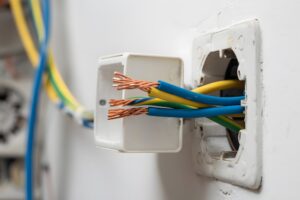
- Middle-of-run outlet: Two cables already occupy this box, so new wires usually join through pigtails to avoid crowding the terminals.
- Junction box: An accessible junction box in an attic or crawl space can feed a new run, as long as the box stays reachable once the work is done.
- Switch box: Older switch boxes may lack a neutral wire, and an outlet fed from one could end up controlled by the wall switch.
- GFCI outlet: Wiring to the load terminals carries shock protection over to the new outlet downstream.
Dedicated circuits make poor sources. Refrigerators, microwaves, bathroom circuits, and kitchen countertop circuits often carry code limits on what else can connect to them. Our electrical outlets & switches services cover these trickier layouts when no nearby box fits the bill.
Checking the Circuit Load Before Tapping in
Our electrician starts by identifying the breaker that feeds the source box and mapping which lights and outlets share that circuit. The check shows how much already depends on it. A circuit serving a single bedroom usually has room to spare, and one that also powers a hallway, a bathroom fan, and a gaming setup might already sit near its limit.
Warning signs include lights dimming when the vacuum starts, breakers tripping during busy evenings, or switch plates that feel warm. Adding more electrical outlet plugs to an overworked circuit only spreads the same strain across more places. A circuit that trips often may call for a separate run from the panel, and the circuit breakers involved deserve a closer look before any expansion.
Running Cable to the New Location
Getting cable from one box to the next is often the slowest part of the job. A careful electrician keeps wall damage small:
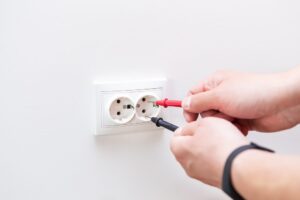
- Power off and verified: The circuit is de-energized and tested at the source box and nearby outlets, since boxes sometimes hold wires from more than one circuit.
- Source box review: The box needs room for another cable, and a cramped box may call for an extension ring or a larger replacement.
- New opening: An old work box is set at the same height as nearby outlets.
- Cable path: A run within the same stud bay drops straight through, and crossing studs may call for routing through the attic or crawl space.
- Cable pull: The cable is fed into both boxes with slack left at each end.
A surface-mounted raceway offers another route in rooms with plaster, brick, or finished paneling, running along the baseboard without opening the wall. Whichever route fits your home, cable routing and connections should be handled by a licensed electrician.
Making Secure Connections at Both Ends
Connections are made at both the source box and the new box, matched to the existing wire gauge and breaker size, so the new outlet works without overloading the circuit.
The new receptacle also needs the right protection for its location, including a tamper-resistant design and, on some circuits, AFCI protection, and it is tested before use. Loose or mismatched connections can create hidden fire hazards, so hire a licensed electrician for this work, and let our outlet and switch team handle the connections and testing.
Situations Better Left to a Licensed Electrician
Online videos often make it look as if anyone can learn how to add an electrical outlet in under an hour, but they leave out the surprises older homes can hold. Knob-and-tube wiring, aluminum branch circuits, missing grounds, and cloth insulation can turn a simple project into a safety concern, and they need a licensed electrician’s attention.
Plaster and lath walls crack easily and hide framing in unexpected spots. Permits also come into play, as cities across Riverside County may require one for new outlets or circuit changes.
More Outlets and Fewer Cords Around the House
Tapping into an existing line is a practical way to add power without a major remodel. A well-chosen source, a circuit with room to spare, and careful connections by a licensed electrician make the new outlet as dependable as the originals.
Our licensed electricians bring over a decade of experience to projects of this kind across the Inland Empire, and we back the work with a 1-year workmanship warranty. To plan an outlet addition that suits your room and your wiring, connect with our electricians today.
FAQs
Can a light fixture box feed a new outlet?
It can, provided the box holds a constant hot wire and a neutral that bypasses the switch. Lighting circuits often carry several fixtures already, so checking the load first helps avoid nuisance trips.
Is it easier to add an outlet on the other side of the same wall?
Yes, a back-to-back location shares the same stud bay and needs only a short cable run. Offsetting the new box by a few inches helps limit sound transfer between rooms.
What cable is used for indoor outlet runs?
Nonmetallic sheathed cable, often called Romex, is the standard choice inside walls. Its jacket color hints at the gauge, with white for 14 gauge and yellow for 12 gauge.