

Quick Summary
Running a new outlet circuit starts with confirming panel capacity and matching the wire gauge to the breaker size. The work involves live panel components, code-required protection, and in most cities a permit, which is why it belongs with a licensed electrician. Careful cable routing, correct terminal connections, and GFCI protection in damp areas keep the outlet safe, and distance, wall access, outlet type, and permits drive the overall cost.
Adding a new outlet can turn a cramped corner into a usable workspace or free up a kitchen counter crowded with power strips. The work behind that small cover plate involves the panel, the wire, and a handful of code rules designed to protect your home.
Homeowners researching “how to run electrical wire from breaker box to outlet” often discover the job has more steps than expected. Knowing what the job involves makes it easier to plan the project with a licensed electrician and understand what you are paying for.
How to Add Electrical Outlet Circuits Safely
Homeowners across the Inland Empire often ask our electricians “how to add electrical outlet” circuits safely. A new circuit starts at the breaker box and ends at the receptacle, with careful planning in between.
The first decision is whether the outlet needs a dedicated circuit or can tap into an existing one. High-draw appliances, including microwaves, space heaters, and freezers, usually call for their own line, and new circuits typically require a permit from your city.
What Goes Into the Job
A new outlet circuit involves several components, each matched to the load and the location. Our electricians select and supply:
- Cable: NM-B cable is the common choice inside walls, sized to the circuit, with 14-gauge wire for 15-amp circuits and 12-gauge for 20-amp circuits.
- Breaker: A breaker that matches the wire size and is listed for your panel brand.
- Outlet and box: A box suited to the wall, whether open studs or finished drywall, along with a tamper-resistant receptacle.
- Testing equipment: Meters and testers that confirm the circuit is de-energized before work begins and wired correctly afterward.
- Safety equipment: Insulated tools and protective gear suited to work near a live panel.
Specialty receptacles, including GFCI, AFCI, or USB-equipped outlets, may suit certain rooms better. Our electrical outlets & switches services can help outline common options for different spaces.
Step 1: Plan the Route and Check Panel Capacity
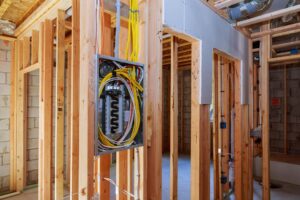
The first step is confirming that the breaker box has an open slot and enough capacity for another circuit, then mapping a practical path from the panel to the new outlet around studs, pipes, and ductwork. An older or crowded panel may need an upgrade or subpanel first, which our electrical panel services cover.
Step 2: Shut Off Power and Verify
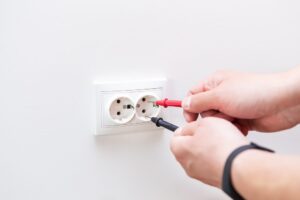
Power to the circuit, and usually the whole panel, has to be shut off and verified with a tested meter before any work begins. Parts of the panel stay energized even with the main breaker off, which is one reason this work belongs with a licensed electrician.
Step 3: Mount the Box and Pull the Cable
A new box is set at a height that matches nearby outlets, and cable is routed through the wall cavity, attic, or crawl space to reach it, secured the way code requires.
Step 4: Wire the New Outlet
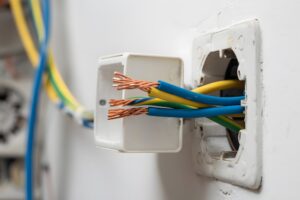
The new receptacle is connected to the circuit’s hot, neutral, and ground conductors, and outlets in kitchens, bathrooms, garages, laundry areas, and outdoor locations typically need GFCI protection.
Step 5: Connect the Circuit at the Panel
The final connection happens inside the panel, where the circuit is connected to a new breaker sized to the wire. This is the highest-risk part of the project, and it should only be performed by a licensed electrician.
Step 6: Restore Power and Test
Once power is restored, the outlet is tested for correct wiring and protection, and the required inspection is completed before walls are closed.
Every step above involves live electrical components and code requirements, so hire a licensed electrician rather than attempting the work yourself. Direct Electric Company’s licensed electricians handle new outlet circuits from the load check to the final test through our outlet installation services.
How Much Does It Cost to Add an Electrical Outlet?
Pricing varies from one home to the next, and several factors shape the final number:
- Distance from the panel: Longer runs need more wire and more labor.
- Wall access: Plaster, masonry, or finished walls take longer to fish cable through.
- Outlet type: GFCI, USB, and 240-volt receptacles typically cost more than standard ones.
- Panel capacity: A full panel may need a subpanel or upgrade before a new circuit can go in.
- Permits and inspections: Local fees add to the overall budget.
An in-person look at the space usually produces a realistic estimate and avoids surprises once the walls are open.
Powering Up Your New Outlet the Safe Way
Running wire from the panel to a new outlet involves careful planning, correct materials, live panel components, and local code requirements. Having a licensed electrician handle the work, with a permit, protects your home, your family, and its resale value down the road.
Direct Electric Company’s licensed electricians handle the entire job, from the load checks to the final inspection. Book online to schedule your new outlet installation.
FAQs
Can I add an outlet without running a new circuit?
Tapping into an existing receptacle can work for light-use outlets if the circuit has spare capacity. Overloading a shared circuit can lead to nuisance tripping and overheating, so a load check by an electrician is the right first step.
Do I need a permit to add an outlet?
Requirements vary by city and county, and new circuits usually require a permit. Our team can help you understand what your city requires before work begins.
What sets a 20-amp outlet apart from a 15-amp outlet?
A 20-amp receptacle has a T-shaped slot on the neutral side and belongs on a 20-amp circuit. These outlets often serve kitchens, garages, and workshops where heavier appliances and power tools plug in.
Can a new outlet connect to aluminum wiring?
Older homes with aluminum branch wiring need outlets rated CO/ALR or approved connectors designed for aluminum. Joining aluminum and copper with standard hardware can overheat over time and create a fire hazard.